Aesthetic medicine is one of the fastest growing fields in healthcare. Botox, dermal fillers, lasers, and advanced skin treatments are in high demand, and many doctors and dentists want to add these skills to their practice. But not all courses are equal. A weekend certificate from an unqualified trainer can leave you unprepared for real patients and real complications. Here is what to check before you enroll. Whether you are a doctor, dentist, or medical graduate, these checks will help you separate serious training from expensive marketing.
Aesthetic Medicine Is Real Medicine
Aesthetic treatments may look simple on social media, but they are medical procedures. The U.S. Food and Drug Administration regulates dermal fillers as medical devices and warns that they should only be administered by licensed professionals who understand facial anatomy. Lasers can burn skin in untrained hands, and a wrongly placed injection can block a blood vessel and damage tissue.
This is why your training must be medical grade, not a beauty workshop. If a course treats injectables like a cosmetic hobby, walk away.
Related reading: Rising Demand for Certified Plastic Surgeons in Faisalabad
Check Who Is Teaching You
The trainer matters more than the brand name of the course. Learn from practicing dermatologists, plastic surgeons, or experienced aesthetic physicians who treat patients every day. Ask how long they have been practicing and whether they handle complications themselves.
Be cautious of courses taught mainly by salespeople or trainers whose own credentials are unclear. Trainers who still treat patients daily stay current with new techniques and products, while full-time lecturers may teach outdated methods. A good trainer shows you their clinical work and their results, not just slides.
Look for Structured, CPD-Aligned Training
Continuing professional development, or CPD, is how doctors keep their skills current and credible. The Accreditation Council for Continuing Medical Education sets standards to ensure that accredited medical education is relevant, practice-based, and independent of commercial influence.
When a course follows recognized CPD principles, you know the curriculum was built for patient safety, not for selling products. Ask any course provider how their program aligns with CPD standards and whether the certification carries real professional weight.
Hands-On Practice Matters More Than Certificates
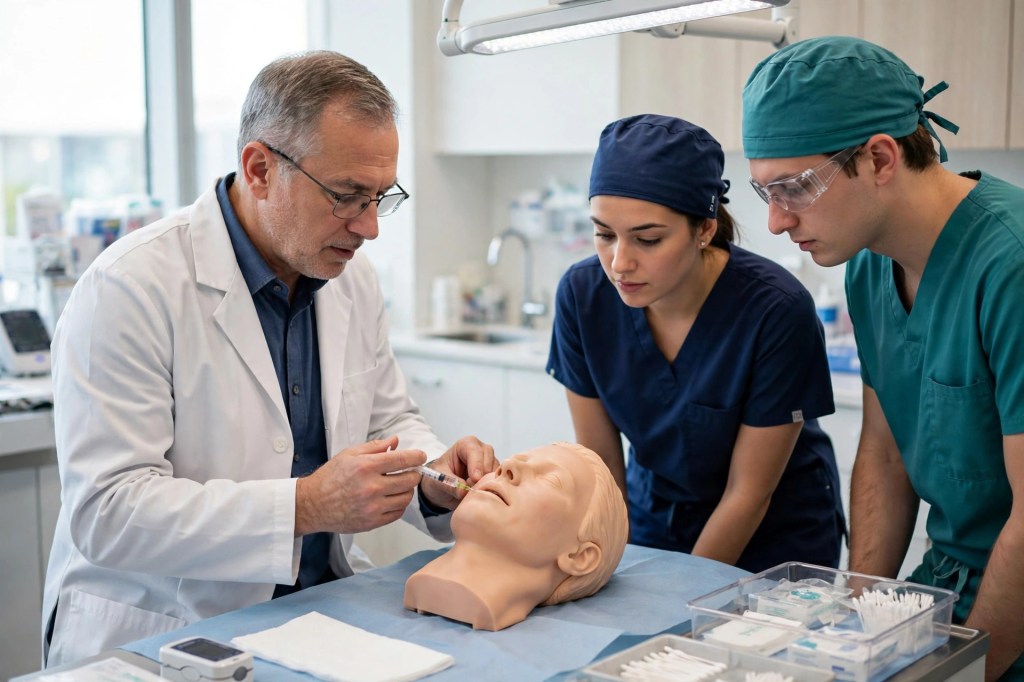
You cannot learn injections from a lecture. A serious course gives you supervised hands-on practice, starting with training models and progressing to real patients under expert supervision. Ask how many practical hours are included and how many procedures you will perform yourself.
Small class sizes matter here. In a room of fifty students, you will only watch. In a small group, you will actually do the work. Ask specifically how many injections or procedures each student performs, not just how many they observe. Certificates are easy to print. Skill is not.
Learn Complication Management, Not Just Techniques
Every honest trainer will tell you that complications happen. Vascular occlusion from fillers, burns from lasers, infections from poor technique. The UK General Medical Council advises doctors offering cosmetic interventions to recognize and work within the limits of their competence.
A course worth your money teaches you to prevent, recognize, and manage complications, including emergency protocols and when to refer a patient. If a course only shows perfect before-and-after photos and never discusses what can go wrong, it is not preparing you for real practice.
Understand the True Cost of Cheap Courses
Bargain courses look tempting, but corners are always cut somewhere. Usually it is the hands-on hours, the quality of products used in training, or the experience of the trainers. Some cheap courses teach on outdated devices you will never use in real practice.
Remember what is at stake. One poorly managed complication can harm a patient and end your aesthetic career before it starts. View your tuition as an investment in patient safety and your professional reputation, not as an expense to minimize.
How to Spot a Trusted CPD Aesthetic Training Program in Pakistan
Pakistan’s aesthetic market is growing fast, and the number of training courses is growing with it. Regulation is still catching up, which means the responsibility to choose wisely falls on you. A trusted CPD aesthetic training program in Pakistan shares clear trainer credentials, a detailed syllabus, genuine hands-on hours, small batches, and honest discussion of complications. It should also offer mentorship after the course ends, because your first independent cases are when you need guidance most.
Programs like Health360’s Harley Institute of Aesthetics are built around this standard, combining structured CPD-aligned learning with supervised practical training.
Questions to Ask Before You Pay
Ask these before enrolling. Who exactly will train me, and what are their medical credentials? How many hours of supervised hands-on practice are included? What is the maximum class size? Does the syllabus cover complication management and emergency protocols? Is the certification recognized, and does it count toward CPD? What post-course support and mentorship are offered? Can I speak to past students? Also ask which products and devices you will train on, and whether they are the ones actually used in modern clinics. Ask if the course covers patient consultation, consent, and managing expectations, because technique is only half the job. Honest providers answer all of these clearly. Evasive answers are your warning sign.
Related reading: The Complete Buyer’s Guide to Choosing the Right Aesthetic Services in Pakistan
Expert Tip
Shadow a working aesthetic clinic for a day before you pay for any course. Watch real consultations, real procedures, and real complication discussions. You will learn more about what the job actually demands in one day than in a week of marketing brochures, and you will know exactly which skills your chosen course must teach you. If this guide helped you, share it with a colleague who is considering aesthetic training.

