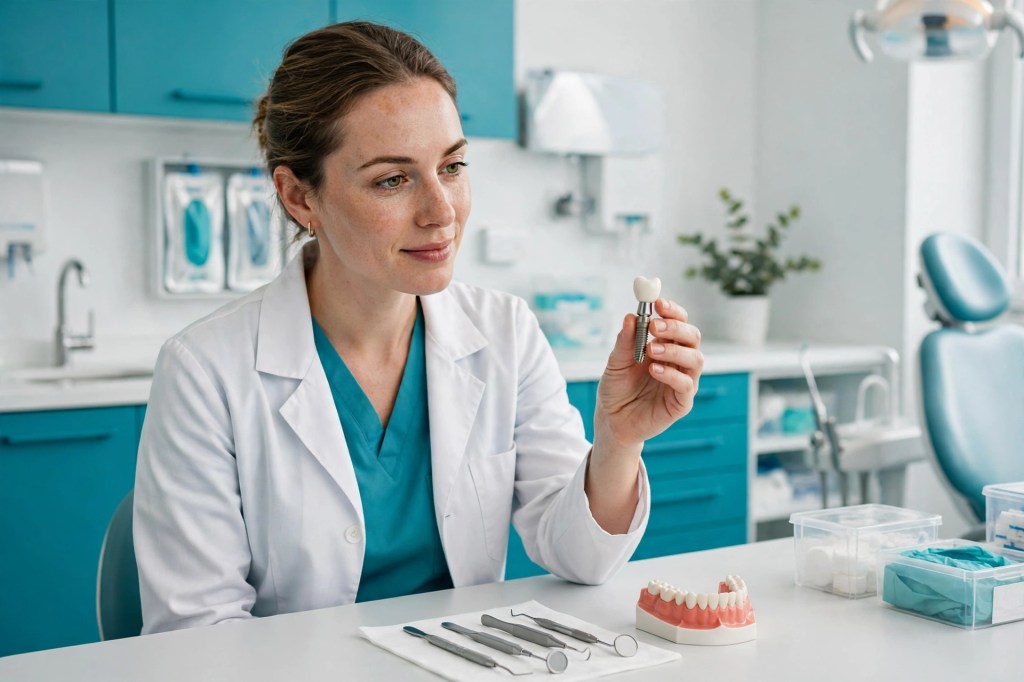
Losing a tooth affects more than your smile. A gap can make chewing harder, change how you speak, and allow the neighbouring teeth to drift out of position. It can also lead to bone loss in the jaw over time, because the tooth root that once stimulated the bone is no longer there. Modern dentistry offers two well-established ways to fill that gap: a dental implant and a dental bridge. Both can restore your bite and your confidence, but they work in very different ways and suit different people.
What Is a Dental Implant?
A dental implant is a small titanium post placed into the jawbone, where it acts as an artificial tooth root. Over the following weeks and months, the bone typically fuses with the post in a process called osseointegration, giving it a stable foundation. Once healing is complete, a connector and a custom-made crown are fitted on top, so the finished tooth looks and works much like a natural one.
Because the implant replaces the root as well as the visible tooth, it does not depend on the neighbouring teeth for support, and it helps preserve jawbone in the area. Treatment usually takes place over several appointments, with a healing period between placement and the final crown. If you are researching dental implants in Faisalabad, look for a clinic that assesses your bone health, gum health and medical history before recommending this option, because those factors can affect whether an implant is suitable for you.
What Is a Dental Bridge?
A dental bridge replaces a missing tooth by anchoring an artificial tooth to the natural teeth on either side of the gap. Those neighbouring teeth are usually reshaped and fitted with crowns, and the replacement tooth sits between them, bridging the space. In some cases, a bridge may be supported by implants instead.
A bridge is a fixed restoration, so it does not come out at night like a denture. The process is often quicker than implant treatment because there is no surgical placement and no long healing period. However, because the supporting teeth must be prepared, a bridge can place extra demands on teeth that may otherwise have been healthy. The area underneath the replacement tooth also needs careful cleaning, since food and plaque can collect there.
Comparing the Two Options Side by Side
Several factors usually shape the choice. Longevity is one of them: with good care, implants often last longer than bridges, although neither option is maintenance-free. Bridges may need replacement sooner, particularly if a supporting tooth develops decay or gum problems.
Your neighbouring teeth matter too. If the teeth beside the gap are already heavily filled or crowned, using them to support a bridge may make practical sense. If they are healthy and untouched, some patients prefer an implant because it leaves them alone. Bone health is another consideration: an implant needs enough healthy bone to hold it, while a bridge does not rely on the bone in the same way, which can make it an option where bone volume is limited.
Cleaning also differs. An implant is cleaned much like a natural tooth, while a bridge requires extra attention under the false tooth, often with special floss or interdental brushes. Guidance from Mayo Clinic notes that the right choice often depends on the location of the missing tooth, the condition of the surrounding teeth and your general health, which is why a personal assessment matters.
How Cost Fits into the Decision
It is natural to ask which option costs less, but the honest answer is that it varies from case to case. The number of teeth involved, any preparatory treatment, and the materials used can all change the final figure, and an upfront price can mislead without considering long-term maintenance. Rather than guessing, ask for a written treatment plan after an examination. Our overview of dental treatment costs in Faisalabad explains the factors that influence pricing, and a consultation will give you figures based on your own situation.
Who May Be a Good Candidate for Each?
Implants may suit you if your gums are healthy, you have enough jawbone, you do not want to involve the neighbouring teeth, and you are comfortable with a longer timeline that includes healing. People who smoke or have certain uncontrolled medical conditions may be advised that these factors can affect healing.
A bridge may suit you if you want a fixed replacement completed in a shorter time, if surgery is not appropriate for you, or if the teeth next to the gap already need crowns. Neither option is automatically better. As the patient resources from the American Dental Association’s MouthHealthy make clear, replacing a missing tooth promptly, with the method that fits your mouth and health, is usually more important than searching for a single best answer. For a broader picture, this complete guide to dental treatments walks through the main restorative options step by step.
Caring for Your New Tooth
Whichever option you choose, daily care decides how well it serves you. Brush twice a day with fluoride toothpaste, clean between your teeth daily, and keep up with routine check-ups so small problems are spotted early. If you grind your teeth at night, ask whether a guard may help protect your restoration. With consistent care, both options can function comfortably for many years.
Frequently Asked Questions
Does getting a dental implant hurt?
The procedure is usually carried out under local anaesthesia, so you should not feel pain during placement. Some soreness afterwards is common and typically settles within a few days.
How long does a bridge take from start to finish?
A bridge can often be completed within a few weeks, usually over two or three appointments, depending on the laboratory work involved.
Can a bridge be replaced with an implant later?
In many cases, yes. Your dentist would first assess the bone and supporting teeth to confirm whether an implant is suitable at that stage.
What happens if I leave the gap as it is?
Over time, neighbouring teeth may shift, your bite can change, and bone in the area may shrink. Replacing the tooth sooner can make treatment simpler.
This article is general information only and is not a substitute for a professional consultation or diagnosis.

